A Publication of Humanities Tennessee

Magic Surrealism

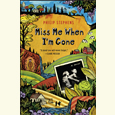
February 3, 2011 Philip Stephens’s debut novel, Miss Me When I’m Gone, is a brilliant quest narrative featuring two protagonists, one light and one dark, who move through a landscape where the magic realism of Gabriel Garcia Marquez operates in a setting that evokes William Faulkner and with a soundtrack that could have come straight out of Willie Nelson’s fever dreams. Stephens will read from Miss Me When I’m Gone at Borders Books in Nashville on February 5 at 2 p.m.

Murder Memoir

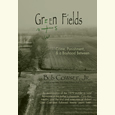
January 4, 2011 In the fall of 1979, Bob Cowser Jr. was a nine-year-old baseball enthusiast in a suburb of Martin, Tennessee, when his friend Cary Ann Medlin was abducted, raped, and murdered by a misfit—in the purest, Southern Gothic sense of the word—named Robert Glen Coe. The last time Cowser saw his playmate alive was through the chain link fence of a public swimming pool where he had spent much of his summer. The girl called out his name and asked, “What are you doing here?” In Green Fields: Crime, Punishment, & A Boyhood Between, Cowser, a thoughtful essayist and author of three previous works of creative nonfiction, explores the myriad implications of the question. What is he doing here?

Bird Fever

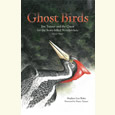
December 13, 2010 “Since the early 1900s, one question and one question alone has swirled around the largest woodpecker to live in our part of the world,” Knoxville naturalist Stephen Lyn Bales writes in his prologue to Ghost Birds: Jim Tanner and the Quest for the Ivory-billed Woodpecker, 1935-1941. “Is it alive or dead? …. Ivory-bills have attained mythical status because they represent all that is wild and unobtainable and resilient in our natural world.”

Odd Duck

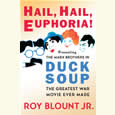
December 1, 2010 At first glance, Roy Blount Jr.’s Hail, Hail, Euphoria! Presenting the Marx Brothers in Duck Soup, the Greatest War Movie Ever Made appears to be an essay, perhaps for Entertainment Weekly, that got out of hand. It is 145 pages long, including photos and a page of photo credits, and they aren’t very big pages at that, barely registering eight-by-five inches. The title is almost longer than the book. The book is barely longer than the script of the 1933 farce it celebrates. But dip into the pages of all things Fredonia, and you realize you are in the presence of a profoundly gifted (Groucho) Marxist delivering his greatest lecture on (Groucho) Marxism.

The Italian Job

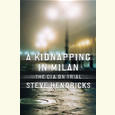
November 17, 2010 “A spy prefers to share only that which is to his benefit, no more, and much of what he shares will not be true,” cautions the journalist Steve Hendricks in an early chapter of A Kidnapping in Milan: The CIA on Trial. “This presents a conundrum for all who would understand espionage: Trust spies not at all, and one learns nothing. Trust them too much, and one might as well have learned nothing.” In researching his new nonfiction thriller, Hendricks, a freelance reporter living in Knoxville, appears to have trusted spies just the right amount, interviewing them on three continents over the course of two years. He clearly learned a great deal—not only about spies, but also about the terrorists they seek to catch by any means they deem necessary.

Riffing on the River

November 5, 2010 Lee Sandlin’s Wicked River is a wickedly funny new history of the great Mississippi, whose violent, profane, drunken, calamitous, hypocritical character is perhaps an archetype of the American character itself. Sandlin will discuss Wicked River at Davis-Kidd Booksellers in Memphis on November 9 at 6 p.m.

TAKE THE SHORT READER SURVEY! CHAPTER 16 SURVEYOR SURVEYING