‘Walk with Me a Ways’
Four friends from rural Kentucky weather the storms of life and love for more than 50 years
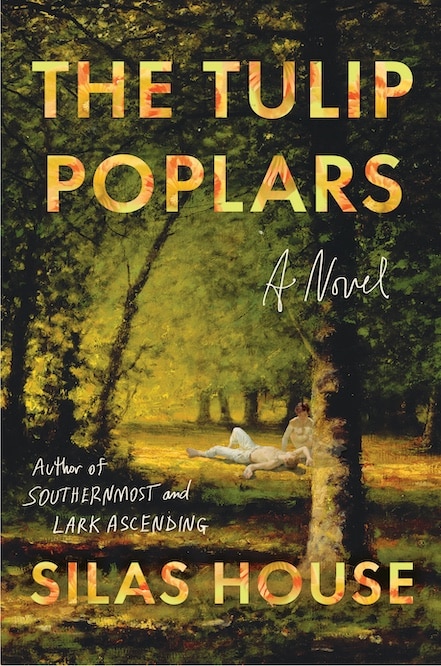
“Amos turned briefly. ‘Just walk with me a ways,’ he said,” writes Silas House in his new novel, The Tulip Poplars. “Many years later, when Tom lay dying, this phrase would be the last thing he replayed in his mind. … Yet in this moment he did not know this was the beginning of everything.” Equal parts historical fiction, romance, and (found) family saga, The Tulip Poplars tells the story of four friends who come together as children in the fictional mountain town of Bright Star, Kentucky, in the early 20th century and how their complicated relationships change and grow over five decades.
Shifting in perspective among a handful of characters, the novel begins and ends with Tom’s point of view, and he serves as the central character and touchstone throughout. Raised on a farm, the son of a quiet, tender-hearted father and a harsh, loveless mother, Tom prefers animals to people and feels most himself when alone in nature. Or with Amos.
Introduced as orphans, Amos and Paschal quickly form a brotherly bond. Amos loves music and poetry; Paschal is interested in natural science. Amos, who is gay, is brutally abused by the head of their previous home, but with Rector Day, the director of the Episcopal orphanage in Bright Star, the boys find a kind and nurturing father figure.
Maeve is Rector Day’s daughter and lives at the orphanage with her father. She has a desperate crush on Paschal, who is Black, but he is more reticent, rightly fearing for his safety should their relationship be discovered. Maeve is headed to college and plans to become a teacher.
Tom and Amos fall passionately in love almost instantly. But their relationship is also cloaked in fear and secrecy — “[Tom] had been taught that desire was the opposite of God with such ferocity that his mind believed it even if his heart did not.” Tom struggles with feelings of guilt and his fear of God’s punishment, but the intensity of the connection between the two young men continues to form the beating heart of the novel, even when life takes them in very different directions.
 When racial tensions explode near Bright Star, Paschal is sent to Lexington, where he becomes involved in the Black Episcopal church and later studies for the ministry. Maeve’s dreams of college are cut short by an unexpected pregnancy — a turn of events that changes Tom’s life, as well. And Amos leaves the orphanage for New York City, where he can live more openly and pursue a career as an entertainer. Even as they experience the ordinary highs and lows of life — work, marriage, parenthood, trauma, loss, death — the strong ties they formed as children are never fully cut for Tom, Amos, Maeve, and Paschal, and they continue to pass into and out of each other’s lives for years.
It is Tom’s gentle father who plants the tulip poplar grove on their family farm. The grove becomes a sacred space for Tom, a place where nature’s abundant gifts provide spiritual comfort when nothing else makes sense. And it is here, in such beautifully lyrical passages as this one – in praise of the natural world and the solace to be found there, that House’s remarkable talents are on full display:
… Tom thought this must be God: the trees, the river, the taste of the water in the creeks, the blue hills in the distance, a sky the color of chicory flowers, the chicory flowers themselves, the shade found in the deepest cove, the way a cool breeze drifted in one place there, the slow drip of the spring (there could be nothing holier than this mineral water), the glowing moss, the ferns he could see breathing if he studied them closely enough, the black beetles that worked in the soil beneath them, the bluejay that swooped down to pluck the beetle from the earth. God was the aching blue in the wing of that jay, in the shine of that beetle’s shell, in the sandy loam the insect tasted just before it died. God was the grove of tulip poplars Tom had loved his whole life.

Tina Chambers has worked as a technical editor at an engineering firm and as an editorial assistant at Peachtree Publishers, where she worked on books by Erskine Caldwell, Will Campbell, and Ferrol Sams, to name a few. She lives in Chattanooga.