Pop Polymath
Meeting Alex Chilton at The Well
It was through a connection in Memphis in late 1980 that I was able to get Alex Chilton on the phone and ask him if I could interview him there over the New Year. He said sure, and we talked for a few minutes about his recent album, Like Flies on Sherbert, which had already been released in two versions, with different mixes and track listings. I said I was traveling to Memphis with my friend David Duncan on New Year’s Day, and we made plans to meet at a biker bar in Midtown, The Well, the day after.
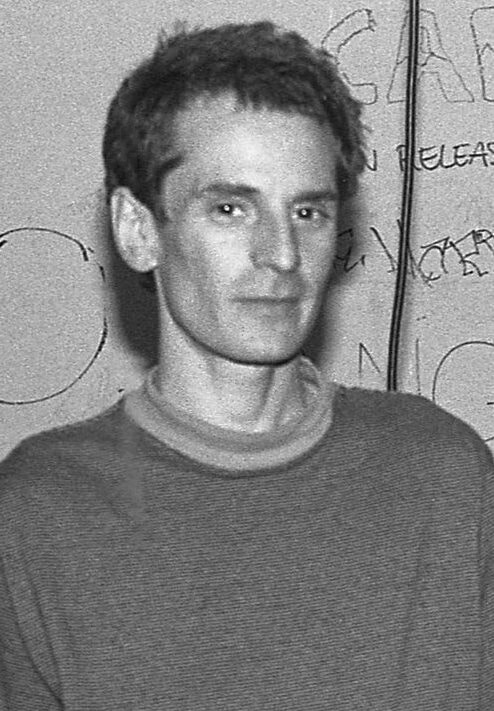
Late 1980 into 1981 was ominous if you followed pop music, or if you read the newspapers and watched television about the death of John Lennon. Some of the best music released in that moment reflected a sense of change and unease that you could obviously sense politically. A track called “No Language in Our Lungs,” from the English rock band XTC’s Black Sea, was released in September, and the eerie funk — part James Brown, part pop — of Talking Heads’ Remain in Light, an October release, seemed indicative of the sea change that arrived with the ascendency of Ronald Reagan and Margaret Thatcher.
Like Flies on Sherbert, which was released in 1980 to a somewhat larger market than its original 500-copy release the preceding year could handle, fit into no overarching concept of rock ‘n’ roll. It sounded like it had been recorded in 1960 and then tape-transferred to 1978. David Duncan and I bought the 1979 Peabody Records album when we were in Knoxville that fall, and we noted that the 1980 Aura Records version added a cover of K.C. and the Sunshine Band’s “Boogie Shoes” to a few Chilton originals. Sherbert also sported covers of Ernest Tubb’s “Waltz Across Texas” and Jimmy C. Newman’s “Alligator Man.”
His recent music was what was on his mind on the phone that day, but I was a fan of his 1970s band Big Star, which made the records that turned Alex Chilton toward the universal fame he enjoys today. The three Big Star albums — 1972’s #1 Record, 1974’s Radio City and Third, recorded in 1974 and released in 1978 — were uncanny, nuanced, perhaps even post-modernist impressions of an era that had ended a decade before they were made: the British Invasion of The Beatles, The Who, The Kinks, The Zombies, and the American band The Byrds.
I had heard from my Memphis connection that Chilton was playing guitar in The Panther Burns, a rockabilly band led by singer Tav Falco. It seemed to me that the man who had written and sung Big Star’s “Kanga Roo,” “The Ballad of El Goodo,” “September Gurls,” “Daisy Glaze,” and “Thirteen” — famous songs now but virtually unknown in 1980 — surely couldn’t be moving among us in any known or normal form.
The Well was a dark bar on Madison Avenue, and in a few months it would become The Antenna Club, where Memphis punk fans — already having had their minds bent by the Sex Pistols show that had taken place in January 1978 at the Taliesyn Ballroom, where Alex Chilton helped adjust the Pistols’ amps — would reign for decades.
Three of us — myself, David Duncan, and Mike Fink, who had grown up in Memphis during Chilton’s career as a teenage pop star with the Box Tops — settled in with Erlanger beers to meet Chilton and Panther Burns drummer Ross Johnson.
The voice was what caught you first. Chilton spoke in a manner I know now as High Delta Aristocrat, a haughty Tennessee accent that’s unlike the nasal tones of East Tennessee or my own Middle Tennessee drawl. Chilton’s subtle drawl came out like he had ice cubes in his mouth, and it had the same elusive depth as his singing voice.
We set up a couple of tape recorders and started talking. David Duncan asked Chilton if he still performed “The Letter,” the 1967 hit that started his career.
“Yeah,” he said. “I slug ‘em immediately. No, I always do ‘The Letter,’ anytime I play. When I play a gig as opposed to Panther Burns playing a gig, I always do Big Star tunes, ‘The Letter.’”
What about solo sets or acoustic sets, I asked.
“You know, I’d like to. But it seems like in the past two or three years I’ve only played about 10 gigs altogether and, I guess in London, when I was there in May I did play one thing alone. But I don’t know, my act has just been nowhere for a few years. I haven’t had it together, haven’t had my head very together to perform on stage, you know — you have to pretty much know what you’re doing. I was just doing all my tunes without any real idea in mind.”
 Chilton had gone from R&B singing in The Box Tops to the style he developed for Big Star — the haughty voice was pitched higher but retained its edge. By the time of Like Flies on Sherbert and his 1980 shows in London, he was singing like a rockabilly madman. It’s reliably reported he flew across the Atlantic from Memphis to London wearing his pajamas and carrying nothing with him, not even a change of clothes.
What Chilton was about at The Well, at the midpoint of his life — he’d turned 30 on December 28 — was, quite simply, a lot of music. In his career he covered material by The Beach Boys and New Orleans R&B singer Willie Tee, and that was just the start for this master of American song: He put his stamp on tunes by Gary Stewart, Ronny & the Daytonas, Cordell Jackson, Furry Lewis, Danny Pearson, Frederick Knight, Chet Baker, and Booker T. Jones.
His own songs are built from sturdy material, but they’re also referential, the work of a pop polymath. He described “Hey! Little Child,” from Like Flies on Sherbert, in terms of other songs. “Yeah, that was about four different songs before I put some words to it,” he told us. “‘Hey! Little Child’ was written about one day before or two days before we actually mastered the record onto disc, because I had a few trashy numbers on the album I had to get rid of. So I went in real fast and recorded that. It’s a combination of ‘Chain Gang,’ by Sam Cooke, and ‘Stranded on a Dateless Night.’”
Memphis in 1981 was becoming a dead end for Chilton, who would play some ill-advised, chaotic shows on a tour later that year. At The Well, it seemed like he was aware how his work, especially on Like Flies on Sherbert, had confounded critics. I asked him if he had liked the reviews.
“Yeah, I read one unfavorable review as far as I could see, and that was in Trouser Press. The people at Trouser Press and the people at New York Rocker, they’re all these Ivy Leaguers who pretend to — I don’t know what they pretend to do. They pretend to be above rock and roll, therefore they understand it totally and everything. They don’t really have too much idea of what it’s all about, as far as I’m concerned. They set up these magazines and publish them, and apparently there’s a lot of people out there who believe it.”
Chilton moved to New Orleans later that year and worked in various jobs: tree trimmer, dishwasher, and, eventually, guitarist and singer in a band that played for tourists in the French Quarter. In 1984 he began touring, and he made a comeback EP, Feudalist Tarts, that connected who he was at that moment to what he’d been all along — a great musician who could sing “September Gurls” and “The Letter” as easily as he could slip into Carla Thomas’ “B-A-B-Y” or the 1958 pop hit “Volare.”
Chilton was not a dissident in any conventional sense. He was a Southerner and self-confessed musical conservative who believed rock had gone astray in the psychedelic era of the late ‘60s. Yet there was a progressive, jazz-influenced element to some of the music he made between 1984 and his death, at 59, in 2010. In particular, the 1986 song “No Sex” hints at an avant-garde fusion of jazz and R&B. It begins: “You know, baby, it’s the 1980s / Baby Doc sent it up from Haiti.”
I saw Chilton perform a couple of dozen times between 1981 and 1999. The guy we met who’d been somewhat down at heel in Memphis ended up getting his due. His work paid off: He could play as many live shows as he wanted every year to audiences who loved him. The Bangles’ version of “September Gurls” and Cheap Trick’s recasting of his 1972 Big Star song “In the Street” for television’s That ‘70s Show resulted in substantial paydays for one of the greatest American songwriters of the second half of the 20th century.
Chilton called himself an entertainer — give him a guitar and an audience, and he would engage you. He was a consummate professional who had, it’s said, the kind of steel-trap recall for songs that you associate with jazz musicians. Listen to Electricity by Candlelight, which documents a 1997 New York show Chilton played with his acoustic guitar after the power went out. Song after song, from Clyde Owens’ “The Last Bouquet” to Brian Wilson’s “Solar System,” flow from his memory. In his mind, they’re all equal sources of wisdom and amusement, and thus more valuable than they’re given credit for.
Copyright ©️ 2025 by Edd Hurt. All rights reserved.

Edd Hurt is a writer and musician in Nashville. He’s written about music for Nashville Scene, American Songwriter, No Depression, The Village Voice, and other publications. He produced and played keyboards on The Contact Group’s 2021 album of 1970s covers, Varnished Suffrages.