Putting Two and Two Together
Christina Baker Kline’s The Foursome imagines the lives of an unusual 19th-century family
Christina Baker Kline, best known for Orphan Train, is back with a novel that is perfect for readers who enjoy the excavation of unique stories heretofore lost to time. The Foursome does just that, illuminating a striking piece of 19th-century history that requires a bold but deft hand in retelling: the double marriage of two sisters from North Carolina to conjoined brothers Eng and Chang Bunker, the eponymous Siamese Twins. Beyond the intriguing scenario, Kline’s draw to this story was particularly strong, as she is a distant relative of the two sisters, Adelaide (Addie) and Sarah (Sallie) Yates.

The Foursome is an ambitious book. Over the course of the novel, readers witness the entire arc of the interwoven duos — which could be considered the fusion of either two sisters and two brothers or of two couples. We see the courtship and the backlash. The initial complications of sexual intimacy and the difficulties of two large families living under one roof. The miraculous feeling of falling in love and the gradual reveal of a partner’s sinister traits. The bearing of many children and the loss of more than one.
In the second half of the novel, readers also behold the country’s descent into the Civil War and, subsequently, the growing pains of Reconstruction. We see the Bunkers sow crops and accumulate slaves, then send their sons into battle to defend their right to do so. We see the Confederacy crumble, inflation rise, and the slaves go free. We see the Bunkers realize they cannot manage their own land, and the formerly enslaved people return in need of paying work, giving rise to the practice of sharecropping.
Clearly, Kline does not shy away from unsavory subjects. Whether in terms of the characters’ sexual proclivities or their political stances, she is determined to demonstrate the nuance of their inner and outer worlds. Even regarding an institution as abhorrent as slavery, Kline refuses to take the easy way out by painting slaveholders as singularly evil. Of particular interest is the fact that Eng and Chang owned slaves despite having been bought and sold themselves. “The brothers had learned early on that the world is divided into those with power and those without. Those who own and those who are owned,” Kline writes. “They’d decided — perhaps from the moment they first felt the weight of coins in their palms — where they stood on that divide. Maybe it was too much to expect that their own pain would lead them to empathy.” Kline affords depth and texture to the enslaved characters as well, though not to the same extent.
Time and time again, the story prompts readers to consider the difference between something that feels unacceptable because it is unfamiliar versus something that should be unacceptable because it is wrong — even if it is commonplace. Late in the book, the twins tour with a circus in an attempt to replenish their fortune, only to be ridiculed for their disability and their race. “We had lived so long with the reality of their exhibitions that we no longer questioned them,” Kline writes from the perspective of Sallie. “What had once been a matter of survival now appeared faintly grotesque. There was, indeed, something disturbing about the spectacle we had come to accept as ordinary.” While this reflection refers to the circus, it may as well have been about owning slaves.
 Despite the flashiness of these plotlines, The Foursome’s richest story arc is narrator Sallie’s silent, internal fight to forge her own identity. Sallie is the shier, more passive sister, always eclipsed by Addie’s charisma and tenacity. When deciding whether to marry Eng, one of Sallie’s most pressing concerns is the consequences of making a lifelong commitment to Addie, who would be marrying Chang. “Already I found myself retreating into silence when she spoke, my own wishes growing smaller, less substantial,” Sallie thinks. “What would it mean to live forever in the shadow of her desires, her decisions?”
In the novel’s afterword, Kline reveals that she chose to feature Sallie’s perspective after discovering that she was buried separately from Addie, Chang, and Eng. Over the course of The Foursome, readers observe Sallie slowly develop her own moral code and sense of purpose, attributes that ultimately empower her to make that final decision regarding her own legacy. To do so, Sallie had to learn to see herself as an individual, a concept which went against society’s expectations for women at the time. Not unlike Chang and Eng, Sallie’s body binds her to others — her family, her husband, her children — but only she has the choice, however difficult, to extract herself.
Many characters in The Foursome struggle with their physical forms in determining their destiny, not only the conjoined twins. Characters rail against the limitations imposed by their gender, their race, and even their weight: the Yates sisters’ mother is morbidly obese, a condition that ultimately kills her. At her mother’s funeral, Sallie reflects, “I thought about bodies — how they define us, betray us. How Mama’s had become a prison.”
On the one hand, The Foursome is a true story, and bodies are not metaphorical, they are fact. But through her imaginative retelling, Kline invites the possibility that they can be both.
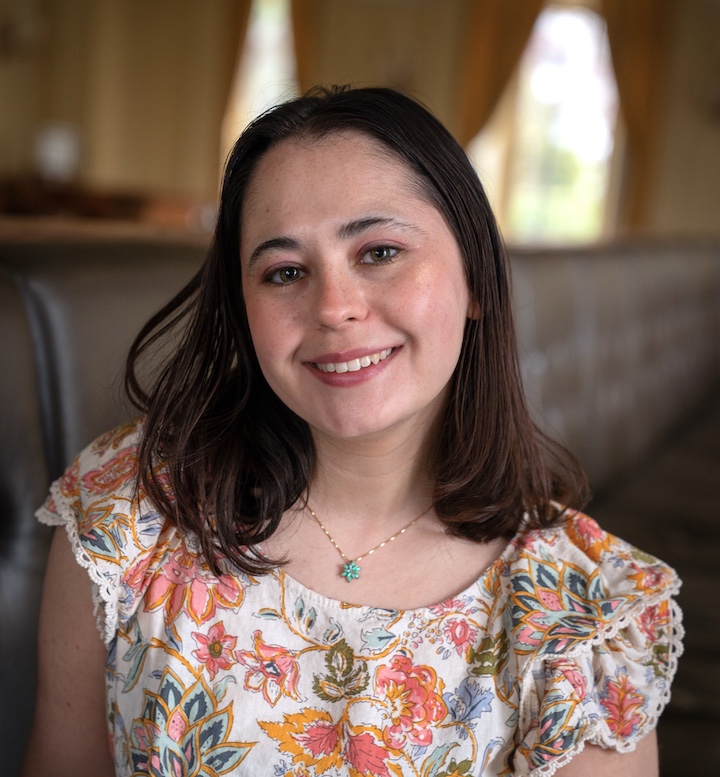
Bianca Sass, a Nashville native, is a published poet, playwright, and essayist. Her plays have been performed in Nashville; Amherst, Massachusetts; and Newburgh, New York. She is currently a Ph.D. student in sociology at the University of Indiana.