An Education and a Love Story
Clarksville native Chris Young faces down modern giants to move beyond prison
One of many things I learned reading Chris Young’s memoir, The Wound Is Where the Light Enters, is that the painting David with the Head of Goliath by Italian painter Michelangelo Merisi da Caravaggio (1571-1610) shows the painter’s face on the beheaded giant.

Caravaggio used his own face in many paintings, but its appearance on this one was personal for Young. He had discovered a book about the painter in the library of a county jail where he was being held on drug charges. His attorneys were trying to convince him to take a plea deal to avoid life in prison. Young had prior convictions for selling small amounts of cocaine, making a life sentence almost inevitable under mandatory sentencing rules. But pleading guilty would mean saying he’d been part of a larger conspiracy, which wasn’t true.
Learning that Caravaggio, like him, had been raised in poverty by a single mother, Young began to see other parallels. The painter had “clashed with the world the moment he left home.” After killing someone who would be called “a powerful gangsta” in Young’s world, Caravaggio narrowly escaped execution. And then there was David, who had “faced down a giant with a stone and a slingshot — and the power of his mind.” Studying Caravaggio’s work, “bright versus dark, shadows versus light, color versus white,” Young decided his “odds of defeating the indomitable United States government” were slim, but he had to try. He would go to trial.
The Wound Is Where the Light Enters is about facing down modern giants. Young grew up in the 1990s and early 2000s in Clarksville, where his beloved mother was a drug addict. In and out of jail herself for standing up to partners who beat her, she had trouble providing for Chris and his older brother Robert. Often their house had no water, no electricity, and no food. Robert looked out for him, and a kind neighbor occasionally fed them. Sometimes he lived with his grandfather or his “Big Mama.” His former stepfather, Mickey, stayed in touch. But the streets were too tempting. He started selling drugs under the name Soulja C, making more money than he’d seen in his life.
At trial, Young was found guilty. The mandatory life sentence was doubled to two life terms because the prosecutor added an “enhancement” designed to increase drug sentences. On the day of the sentencing, U.S. District Court Judge Kevin Sharp had no choice.
 But Young, wearing shackles, could do one thing before being sentenced. He could address the court. For a solid year he worked on his speech, drawing on the knowledge he’d gained in the jail library, where he devoured everything from history to literature to the sciences. He was particularly moved by philosopher James Allen’s work on the power of the mind to shape reality. Friends told Young he’d anger the judge by speaking, but a quiet voice inside urged him on.
Young’s speech couldn’t change the mandatory sentence, but it caught the attention of Judge Sharp, who later stepped down from his lifetime appointment because he thought sentences like Young’s were wrong. It also caught the attention of two VICE News reporters and, eventually, Kim Kardashian, who advocated on his behalf. Through the work of attorney Brittany K. Barnett — who also has a memoir, A Knock at Midnight — Young’s sentence was commuted to time served in 2021.
In a foreword, Sharp writes that he was “heartbroken and angry” at having to sentence Young to life. As a private attorney working with Barnett, Sharp was among the first to greet Young at Nashville International Airport after his release.
Young’s book is a heartbreaking story but a very good read. He shows us what it’s like to grow up hungry in a house where you can’t take a bath or flush the toilet and what it’s like to survive in prison, with its dangers and petty tyrannies — but also its surprises. In one scene in solitary confinement, he finds a copy of Hamlet stuck behind a toilet and realizes how much Shakespeare’s double word plays resemble rap.
The Wound Is Where the Light Enters is both an education and a love story. It’s a testimonial to the human spirit and a hallelujah to libraries, which literally changed Young’s life. Since leaving prison, he has earned a degree from Southern Methodist University and become engaged to Barnett.
When you tap into your own goodness, your own potential, he writes, “you are free, no matter what.”
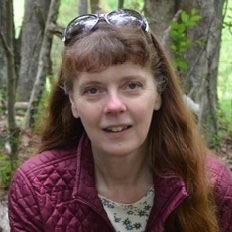
Jane Marcellus is a Tennessee writer whose publications include journalism, critical analysis, and short memoir.