Celebrating Minnie
Don Cusic and Mary Ellen Pethel survey the life of a beloved Opry icon
In their introduction to Howdy!: The Minnie Pearl Story, authors Mary Ellen Pethel and Don Cusic note the unusual dilemma they faced about what to call their subject. Minnie, with her signature price tag hanging from her straw hat, is famous for decades of country comedy performances at the Grand Ole Opry. But Minnie’s not real. She’s a character created by Sarah Colley Cannon and wouldn’t exist without Sarah to bring her to life. There lies the Sarah/Minnie conundrum, which the authors resolve by deciding to use “Sarah” before her first Grand Ole Opry performance in 1940 and “Minnie” afterward.

Pethel and Cusic, both Belmont University professors, have experience with Minnie and country music research. Pethel was a consultant for the documentary Facing the Laughter: Minnie Pearl, and Cusic was an advisor for Ken Burns’ documentary on country music. He has also written a musical about Minnie, as well as biographies of country musicians.
In the preface, Cusic instructs the reader: “Buckle up and settle in for a scenic journey through time and place.” The first chapters offer a detailed review of Sarah’s early life, including her childhood in Centerville, Tennessee, her student days at Ward-Belmont (now Belmont University), and her time spent traveling and working for a theater company during the Great Depression. Her debut at the Grand Ole Opry, where she shared the stage with other stars of her day, was a turning point in her career. The authors give mini biographies of performers with whom she had personal or professional relationships, including Roy Acuff and Elvis.

Pethel and Cusic also explore the evolution of the Grand Ole Opry and acknowledge that comedy has evolved, too. They write, “Today, Minnie Pearl’s act, rooted in the imaginary town of Grinder’s Switch, feels less LOL and more OMG.” Perhaps this refers to Minnie’s never-ending search for a “feller” and the stereotype of a man-obsessed woman.
Or maybe it refers to the view that Minnie’s comedy mocks country life. The authors note that producers of the Grand Ole Opry’s radio broadcast on WSM were initially concerned that Minnie’s act would seem condescending. Minnie herself worried that she would offend her mother who was from a “‘provincial, conventional, proper’ family.” Howdy! hints at this issue with Minnie’s act and touches on explanations for her success, such as her self-deprecation, but the question remains in the background.
At times, Minnie herself remains in the background in sections dedicated to serious moments in her career. In a chapter explaining the failure of the “Minnie Pearl’s Fried Chicken” restaurant chain, the reader does not hear from Minnie in her own words except for one sentence indicating her desire to enter the business world. A chapter that delves into her support for George Wallace includes only a brief excerpt from one of her performances at his campaign rallies, and the authors note that her material “was light-hearted and largely avoided Wallace’s platform.” Wallace is infamous for being elected Alabama’s governor in 1962 and declaring “Segregation now! Segregation tomorrow! Segregation forever!” In 1963, he stood in a University of Alabama doorway to oppose Black students’ enrollment.
 It’s unclear if any relevant material from Minnie exists on the restaurant chain or Wallace. The reader will learn a great deal in these sections about the Civil Rights Movement, George Wallace’s career, and even the history of Kentucky Fried Chicken but may wish Minnie occupied a more central role.
Howdy!, recipient of the 2025 Tennessee History Book Award, is a useful starting point for anyone wanting to know more about Minnie or the Grand Ole Opry, but longtime fans will especially appreciate it. Pethel and Cusic write that this biography is intended to celebrate its subject, and they do just that. The authors have gathered many photographs, stories, and reminiscences from contemporaries, and Minnie’s admirers will enjoy adding their own memories to the collection.
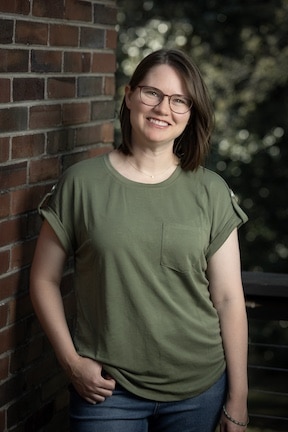
Maggie Gigandet is a freelance researcher and writer focusing on the outdoors and people with interesting passions. Her work can be found in The Atavist, Backpacker, Smithsonian Folklife, and Atlas Obscura. For more of her writing, please visit maggiegigandet.com.