Deeper, Darker, Further
Murder overshadows a caving expedition at a unique tourist attraction in the 1930s
The latest novel by Gin Phillips, Ruby Falls, opens with a brief scene of a corpse in a cavern deep underground in Chattanooga. “He is not alone. … He is a banquet,” the author writes, “and, if he were alive, he would be equally disturbed and pleased. He dislikes — disliked — wastefulness, so it’s appropriate that at least the bugs are getting something out of his murder.”

With that unsettling introduction, the novel proper begins a few years earlier and follows the events leading up to the crime. Because the dead man’s name is not given, the reader spends the first half of this engrossing and suspenseful novel wondering who has been killed. Six men and two women go into the cave for a publicity stunt that quickly turns frightening as tempers flare and patience frays. When the victim’s identity is finally revealed, the question remains: Who among them in this dark, damp, and claustrophobic environment is the killer?
The real Ruby Falls Cave was discovered in 1928 by Leo Lambert, who named its majestic 145-foot-tall waterfall after his wife. Public tours began in 1930. Located more than 1,000 feet beneath Lookout Mountain, it remains the tallest underground waterfall open to visitors in the U.S.
In the novel, the tourist business hits a slump in 1932 due to the Great Depression. That’s when the fictional Lambert gets creative. To promote the attraction, he hires a psychic to find a hatpin hidden somewhere deep in the cave, using only the power of his mind.
In addition to the Lamberts, characters in the story include Ruby’s friend, Ada, through whose eyes readers see most of the action, although Phillips devotes individual chapters to the backgrounds of the other characters who enter the cave as well. They are the supposed psychic and his secretive wife, a skeptical reporter, the hot-tempered guide, Leo’s businessman friend who hates caves, and the psychic’s devoted manager. Tailing the group in case of emergency are another experienced guide named Quinton and Ada herself, who has become unexpectedly addicted to caving — at first venturing out on her own without permission, but once discovered and befriended by Quinton, invited into the cave to participate in this unusual adventure. While members of the local press wait aboveground for the result, those inside the cave soon experience a far more physically grueling and emotional journey than they anticipated.
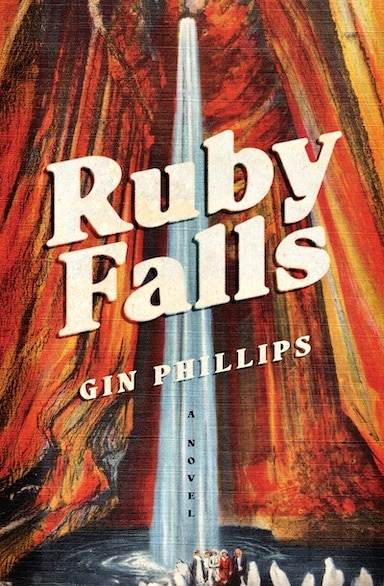 Ada, a 46-year-old childless widow, is the beating heart of Ruby Falls. Phillips beautifully renders Ada’s interior life: the loneliness, the haunting family memories, the grief that seems larger than the recent loss of her husband, and an unidentifiable longing for something more. When Ada enters the cave for the first time — undaunted by the close quarters and the mud, crawling on her hands and knees — she is almost reborn: “Ada does not want to go back. She wants to go deeper and darker and further, and she wants to save up this feeling that her body can take her to someplace she’s never seen. There are so many places she’s never seen, and this tunnel might lead to all of them.”
But even Ada is daunted by the psychic’s fruitless search as the hours roll by with nothing to show for their efforts apart from anger, exhaustion, suspicion, and finally blood. Once the explorers find one of their number dead, no one seems trustworthy. Everyone is a stranger with uncertain motives, even Quinton, to whom Ada feels increasingly drawn. And yet, as the pressure increases, she wonders how well she really knows him.
Ruby Falls depicts a fascinating journey taking place simultaneously through the dark and twisting passages of a wild cave system and the even more tortuous caverns of the human psyche, as lies and secrets slowly come to light. Through it all remains the beleaguered yet stalwart Ada and her love affair with the cave. “Ruby’s name can be on every sign. Ada’s is cut into the mountain. No one gifted it to her. She climbed and shoved her way here to carve her own self, and if anyone wants to scratch it off, they will have to cut deeper than she has. She does not believe they can do it.”

Tina Chambers has worked as a technical editor at an engineering firm and as an editorial assistant at Peachtree Publishers, where she worked on books by Erskine Caldwell, Will Campbell, and Ferrol Sams, to name a few. She lives in Chattanooga.