Haunted
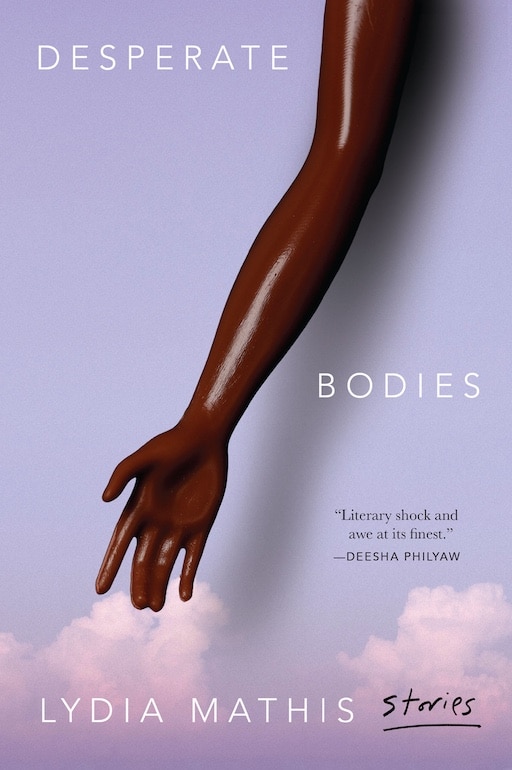
Stories of girls and women veer toward darkness in Lydia Mathis’ Desperate Bodies
In a standout story from Lydia Mathis’ debut collection, Desperate Bodies, an overworked campus safety officer named Sandra is hours deep into an exhausting shift when she realizes that an injured woman, covered in dirt, has entered the office.

She knows her responsibility, both as a professional and as one woman witnessing another in a moment of great crisis and need. But she cannot bring herself to look this young woman in the eye. “Sandra felt like she did when she was nine and afraid of the dark and refused to look inside any room that didn’t have lights on. She’d prefer not to know what she didn’t know.”
How do we share meaningful connections with others when we’re frightened or overwhelmed ourselves? Even the story’s stark title, “A Body Walks into Public Safety,” highlights its sense of dislocation in the midst of extremity. The stories in Desperate Bodies live at the perilous faultlines of contemporary girls’ and women’s lives, particularly those of Black girls and women.
A number of the stories delve into the complex expectations and fraught social dynamics that young girls face within their families. The narrator of the opening story, “Girlhood Lessons,” details the severity of harsh, sometimes abusive treatment she receives from her grandmother and mother, while the young boys and men in her family are excused and protected.
“I looked at my cousin while he ate his ribs,” Mathis writes, “and I could feel something in me ripping, like a fountain pen pressing too hard into paper, leaking ink underneath, the surface below permanently stained.” The gendered disparity in their family environment fuels intergenerational shame and trauma.
 “Under the Covers” focuses on an uneasy dynamic between the protagonist and her cousin. She is troubled by “the sense that the darkness came from her, from her heart, from her feelings toward her cousin, feelings that she didn’t fully understand. It was those feelings, of something dark, something scary living beside her happiness and love for her cousin, that made her relationship with her cousin so confusing.” This character gets lost inside her own subjectivity, and the story reflects her disorientation.
“Parent-Teacher Conference” follows a sex worker trying to show up for her daughter as best she can. A mother-daughter story involving addiction, “The Long Sleep,” steers as close to horror as any story in the book.
Desperate Bodies also highlights the dynamics of fraught friendships. “How to Lose a Friend” recounts a complicated bond the narrator shares with the only other Black girl in her grade at school. Turns out, this new friend has a hidden social power: “Kids who talked to her talked about the other people who talked to her. It was like they were pouring their gossip into a pot, and it was up to Jenny to stir the ingredients and redistribute it. A hearty soup of secrets.” “House Party” unspools as its narrator’s evening at a frat party with her freshman dorm roommate (on whom she has a serious crush) devolves into a series of strange choices.
In the collection, depictions of girls and women run the tonal gamut from flinty sarcasm to dire tragedy. Especially when it comes to the roles that men play in their lives. Slighter stories like “How to Properly Stalk Boys: A Guide” and “Tinder Date” offer glimpses into thorny (and sometimes gross) experiences of narrators who expose the rougher aspects of longing to find a guy to date. The book’s final story, “Precious,” follows a meek wife whose struggles come up against a controlling husband.
Several stories challenge the ways that religious communities may take their women members for granted, thereby dimming these women’s self-worth. In “push,” a new mother has no sense of how to individuate from the expectations of her overbearing pastor father and the church world in which he’s raised her. Another story, “Let the Church Say,” is written in the voice of a church congregation’s collective we. It unfolds around a frightening image that spurs on a nightmare sermon meant to suppress the value and dignity of women in the church.
The threat of violence looms over many of these stories. “The Growing Oak Tree,” is also written in the collective we narrator, giving voice to the female victims of a psychopathic killer. Another story, with the deceptively sweet-sounding title “Will You Be My Valentine?,” culminates in a frightening realization for its schoolgirl protagonist, “All at once, she sensed that it was too late to be protected, too late to be saved.”
Mathis’ protagonists share an intense, at times almost dissociated, sense of isolation. Most of these stories press into their protagonists’ off-kilter subjectivity in ways that haunt or unnerve. As a debut, Desperate Bodies reads like a knife just beginning to sharpen itself against stone. It glints with danger already, yet suggests the leaner, more lethal slices to come.

Emily Choate’s fiction and essays have appeared in Mississippi Review, storySouth, Shenandoah, The Florida Review, Rappahannock Review, Atticus Review, Tupelo Quarterly, and elsewhere. She holds an M.F.A. from Sarah Lawrence College, served as one of the founding editors of Peauxdunque Review, and lives near Nashville, where she’s working on a novel.