Nightwalking
Book Excerpt: Forest Time
The girl behind me grabs my jacket as we head out the door. A dozen middle school students follow her, their classroom teacher in the rear. We go dark and with voices off, a flashlight tucked into my pocket for backup. Moments ago, still surrounded by the comforts of the visible world, we were standing in the bright interior of the dining hall, our reflections gleaming in anarchic color in a long row of windows. Now we’re as blind as moles as we creep forward, wary strangers in a suddenly mysterious landscape. Yellow light spills from the lobby and grows fainter with each step we take. Where it fades altogether, we enter blackness.

We trace a service road through campus, where for the time being there’s nothing to bump into except one another. Partway across an auto bridge, we peer over the railing into the invisible waters below while taking in the sound of the river sculpting the valley. Further on, we reach the woods and step onto a footpath. The blackness turns even blacker than before. The girl tightens her grip on my jacket as muted squeals of alarm issue from several students. We keep going, deliberate and slow, feeling for tree roots and other obstacles at our feet, each of us a link in a chain.
My companions, perhaps for the first time in their lives, can see for themselves how precious a thing true darkness is, driven by our cities and towns into refuges such as this one. Even here, we would be hard-pressed to find it on clear nights when city lights bleed across the northwest horizon. Tonight, though, the sprawling darkness consumes everything.
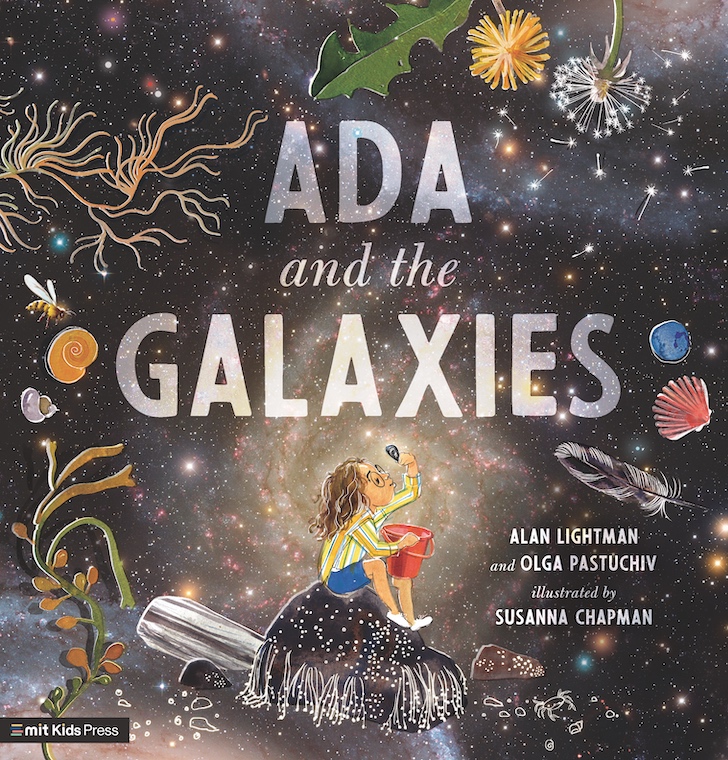
Nights free of cloud cover afford stargazing and endless stories about constellations and the Milky Way — or perhaps not endless since I’ve committed just a few to memory. A student will ask, “Are those real stars?” a question as revealing about the realities of childhood today as those delivered in daylight (“Is that a real cemetery?”). We’ll lie on our backs and wait for a shooting star or an orbiting satellite to sally past. Stars in Cherokee lore are cornmeal scattered across the sky — manna from heaven or perhaps manna going to the heavens. According to one version of the story, a giant dog stole food from villagers, who chased it away, and as it fled cornmeal fell from its mouth and hung in the sky. Contrary to notions of feeling alone in an otherwise empty universe and what we moderns often tell ourselves (which is that we no longer need to live by stories), the story implies an intimate relationship between humans and the dome overhead — an intimacy as close as the darkness is to each one of us just now.
***
Let’s say we have to start over. Civilization has run into trouble. As usual, the cause is human fallenness, which we have cast upon the world for all to see, some to deny, and many to despair over. Where to begin? I would pick up where I left off and work for a nature center inside a national park straddling the backbone of the Appalachians. A psychologist might have much to say about someone who feared the world’s imminent demise in his youth and entered a profession whose mission is to preserve it as an adult. Originally an act of desperation, outdoor education became something of a career for me as I chose it, again and again, each time other opportunities came along. When I understood how well it suited me it turned into a vocation. Something like the process of forest succession has taken place along the way. While I’m the same person I’ve always been, time and experience have nevertheless molded me into someone other than the young man who sat down in Ken’s office for a job interview years ago when I was asked about my nonexistent “vision” for environmental education.
The first moon landing occurred within months of Tremont’s founding. One event, otherworldly in scope, marked the pinnacle of human technological achievement. The other was a local endeavor whose mission was to help people find their place on earth, to learn to take care of it, and to not use it all up. One represents a dream of human aspirations that became a reality, while the other remains an ongoing effort.
The essence of the work has changed little over the years. Go outdoors. Move your body and open your senses. Let curiosity be your guide. Stoke its flames by looking and listening and following your nose. Don’t hurry.
Welcome the rain falling on your skin and the winds drying it. Listen to the poetry in the river’s steady roll and the wind moving through the forest. Discover how much more you are capable of than you thought and how much less you need to be content.
Participate in the life of a place by immersing yourself in it. Learn its vocabulary and make contact with its inhabitants. Read the landscape. Get down on all fours. Put pen or pencil to paper in the open air. Discover that by peering outside yourself, you are also peering within.
Share living quarters, meals, and campfires with strangers and new friends. Claim belonging in the community where you find yourself. Find your voice and trust the good intentions of others. Look out for one another. Practice being still.
 Locate yourself within a chapter belonging to a much longer story in time. Grasp the hard truths of history, including the grave injustices suffered by Cherokees who were forcibly removed from their land yet still thrive as a people. Celebrate the shared wealth that has become public lands and the sacrifices mountain residents made, not by choice in all cases, to create them. Take inspiration from those who came before you. Walk in their footsteps with humility and joy.
Interrogate your desires measured against essential human needs: food, water, shelter, and belonging. Lean on others in moments filled with anxiety and bodily discomfort. Regard suffering as part of life and a tutor you can learn from. Salute one another’s ability to blossom amid hardship.
Consider the farmers and laborers who grow the food on your plate, the farms where it is grown, and the plants and animals whose deaths sustain human life. Enter into moments set aside for reverence with gratitude. Feast on the gifts of Creation while fasting from civilization’s excesses. Know yourself as an ensouled creature with a hunger for something other than what the zeitgeist has to offer.
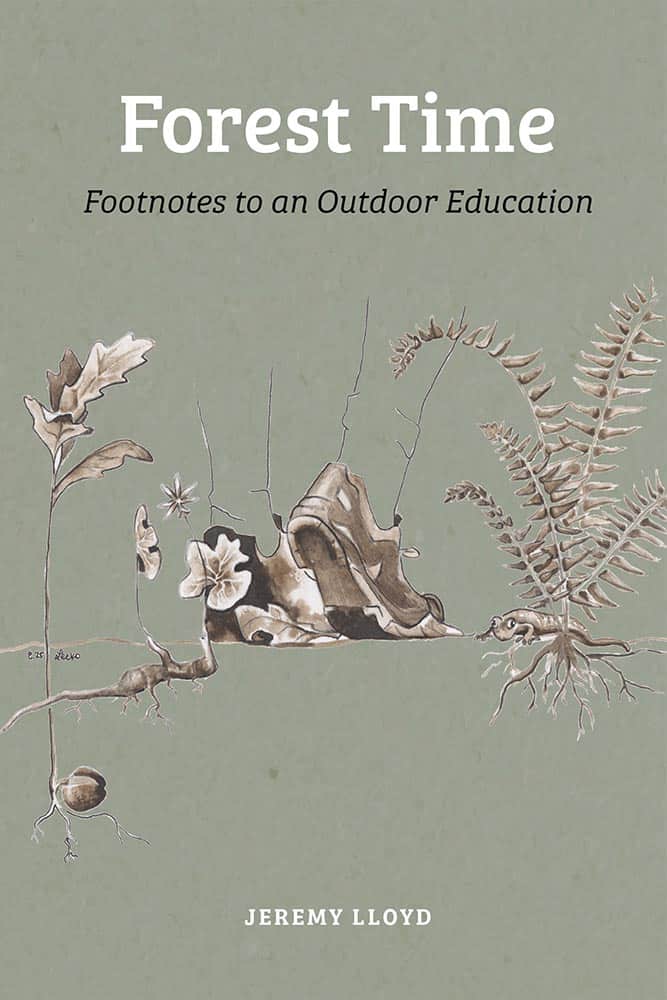
Get out of your head and discover a fullness of being unknown to you until now. Be at home in the world. Merge with the river and the forest and the salamander perched in your palm. Return home at week’s end with newfound insight. Tend it in your soul as you would a seed planted in a garden and share it with others. When the time is ripe continue the work of renewing the world already underway in yourself.
Outdoor schools, perhaps better than any other cultural institution, are ideally suited to help people discover such gifts. They are likewise positioned to give lost connections with nature a more central role in formal education and lifelong learning. In their daily routines, they foster ways of being aimed at achieving harmony with the natural world. In so doing, they function as laboratories for innovation in education by engaging the whole person in the learning process, which other institutions — business, civic, and otherwise — would do well to model. They invite the understanding that we are not only stewards of the natural world in the abstract but also a part of the places where we live. Nature, according to this fundamentally different orientation, isn’t just out there. Nature includes us.
Excerpted from Forest Time: Footnotes to an Outdoor Education by Jeremy Lloyd (University of Tennessee Press). Copyright ©️ 2026. Reprinted with permission. All rights reserved.
Jeremy Lloyd lives with his family in East Tennessee and works at Great Smoky Mountains Institute at Tremont.