Age-Old Struggles, Modern Absurdity
Clutch follows five women confronting midlife
With her sophomore novel, Clutch, Emily Nemens enters the chat, joining the ranks of creatives dissecting the challenges of modern womanhood and motherhood. The novel begins and ends with the reunion of five women who were once college roommates and are now long-distance best friends all turning 40, but the bulk of the story follows each woman individually. While the five friends vary widely in terms of relationship status, number of or desire for children, and professional success, each one grapples in her own way with the cognitive dissonance of feeling pressured to do it all, in spite of a fourth-wave feminist understanding that women are held to impossible, unequal standards.
Fans of recent works such as Margot’s Got Money Troubles, Nightbitch, The Five-Star Weekend, and Fleishman Is in Trouble will enjoy the book’s clever but sensitive narrative voice and the unflinching depiction of women reaching their breaking points, only to use these crises as catalysts to learn to do… less.
Through the quick-witted omniscient narrator who shifts gracefully between the main characters’ perspectives, we learn about the daily minutiae of each woman’s life — what makes her tick and what is slowly driving her to insanity. The sources of their afflictions vary greatly. If you can name a minor roadblock or life-altering tragedy women may face in middle age, it is probably included in Clutch. The women’s parallel journeys demonstrate the duality of the human experience. Infertility and unwanted pregnancies. Stalled careers and job-induced burnout. Supporting a partner through addiction and facing a mental health emergency yourself. The grief of losing parents young and the difficulty of supporting parents as they age.
None of these themes are obscure, but Nemens captures how these age-old struggles interact with today’s unique flavor of absurdity and mounting existential threats. “Just as gravity was unavoidable, shrinking was undeniable too. Everything was dwindling,” Nemens writes. “The women’s remaining time on earth, their biological capacity to ovulate, the time when their young humans still thought they were gods (or if not deities, then at least all-important, all-knowing giants). The amount of clean oxygen left in the atmosphere, the amount of clean water pooling in underground aquifers, the amount of arable land that was not sprouting genetically modified seeds or being overtaken by kudzu.”
 Throughout the book, the women’s personal problems are superimposed onto the larger legislative and moral debates happening around the country. Progressive readers will also appreciate the unabashed political jabs interspersed throughout the story.
While Clutch is billed as a novel about female friendship, there are only a handful of fleeting moments where the whole gang is together. Nemens deliberately explores this paradox of 21st-century friendship, however. While group chats enable the women to be in constant contact if they so desire, we see how the pressures of today’s world keep them apart, siloed in their individual chaotic lives. “From a distance, a friend could offer some things: meal delivery, flower delivery, the delivery of gossip about a college beau that would send them all cackling. But none of these five were saints,” Nemens writes. “None was so selfless as to sacrifice her own journey for that of another. Ahead of each woman lay too much sparkling possibility, and, importantly, too many things to get done.”
But the few scenes where we see the five friends in the same place paint an optimistic picture, even if the gatherings are often brought about by disaster. Each woman is finally able to divulge her own faults, setbacks, needs, and wants, and we are left with the hope that maybe, next time, they won’t go so long without seeing each other. “Traversing parallel paths through everyday life is fine and well until it is not,” Nemens writes. “Until you’re running through the underbrush from your trail to another in an all-out sprint, blackberry brambles and hidden stumps and squelchy ground be damned. Your shoes might get ruined, but there are more shoes.”
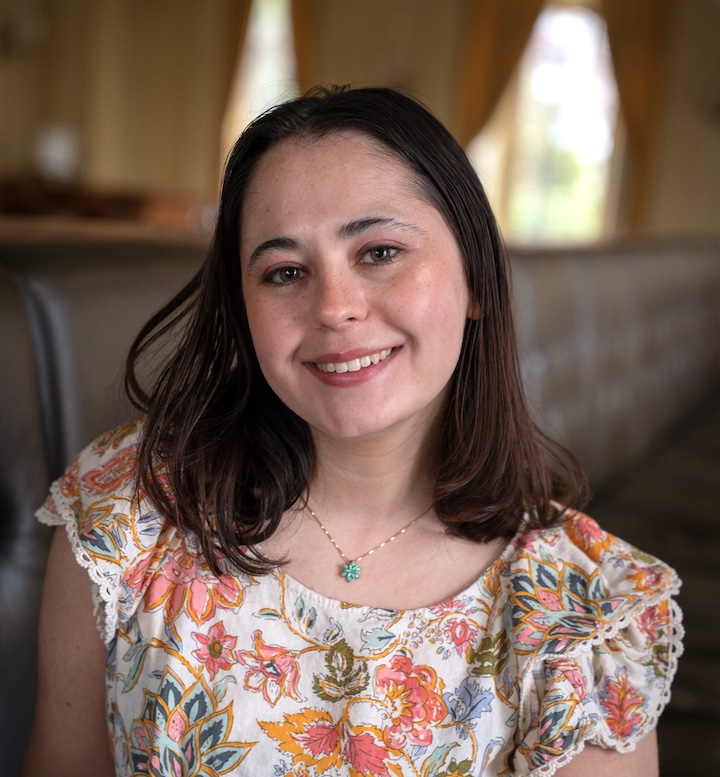
Bianca Sass, a Nashville native, is a published poet, playwright, and essayist. Her plays have been performed in Nashville; Amherst, Massachusetts; and Newburgh, New York. She is currently a Ph.D. student in sociology at the University of Indiana.