‘A Joy and a Wonder’
Ren and Helen Davis celebrate two photographers who captured the beauty of the Great Smoky Mountains
In their introduction to Land of Everlasting Hills, a collection of early 20th-century photographs by George Masa and Jim Thompson documenting the Great Smoky Mountains, authors Ren and Helen Davis quote a 1926 essay by Horace Kephart, a writer and outdoorsman who became a passionate advocate for preserving the region’s beauty through the creation of a national park: “Here to-day is the last stand of American primeval forest at its best. If saved … it will be a joy and a wonder to our people for all time.”

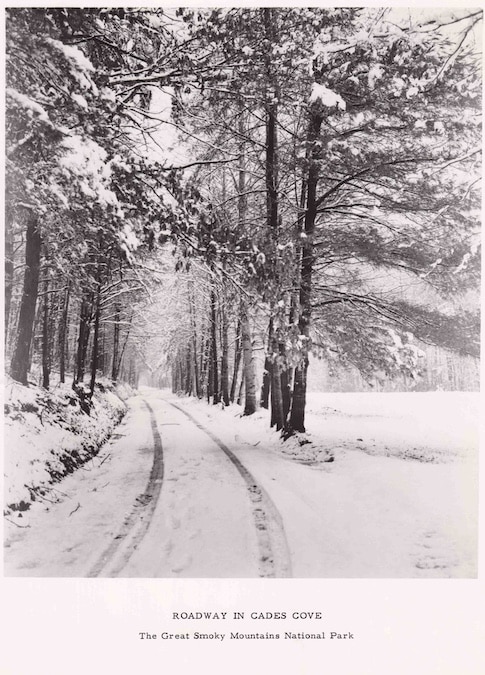
Masa and Thompson, gifted artists with distinctly different sensibilities, captured the unique beauty of the Smokies, then a relatively unknown area outside the Southeast. Along with the advocacy of figures like Kephart, their photographs played a significant role in making the national park a reality in 1934. In addition to the more than 200 photographs in Land of Everlasting Hills, the Davises provide a history of the park’s creation, as well as biographies of both photographers. They answered questions from Chapter 16 by email.
Chapter 16: You acknowledge in Land of Everlasting Hills that you went into the project not knowing much about George Masa or Jim Thompson. What surprised or intrigued you as you learned about their lives and work?
Ren and Helen Davis: In March 2020, we were contacted by Nathan Holly, acquisitions editor at the University of Georgia Press. He inquired if we might be interested in producing a book about George Masa, similar to our previous work Landscapes for the People: George Alexander Grant, First Chief Photographer of the National Park Service. At the outset, we knew only that George Masa was a Japanese photographer who photographed in the Great Smokies in the early years of the 20th century.
Shortly after we began the project, we contacted Nathan Holly to share that George Masa was only half the story. While he was working on the North Carolina side of the mountains, a commercial photographer in Knoxville named Jim Thompson was producing images of the Tennessee side.
Of Jim Thompson, we knew even less. We were first introduced to him in our research for Landscapes for the People. In that book, we learned President Franklin Roosevelt had declared that 1934 would be recognized as the “National Parks Year” and authorized that 10 postage stamps depicting scenes from the national parks be issued during the year. George Grant oversaw selection of photographs to be adapted for stamps. Five of the images were by Grant, two were by Ansel Adams, and the image of the newly established Great Smoky Mountains National Park was by Thompson. Fortunately, through a friend in Atlanta, we were put in touch with Paul James with the Knoxville History Project, an expert on Thompson.

The COVID pandemic began shortly after our work began, and we were limited to telephone, internet, and email research for more than a year. Finally, in the summer of 2021, we were able to visit libraries and archives in Tennessee and North Carolina to review documents and images and begin to piece together a more complete story.
What we learned was remarkable and surprising! Not only were Masa and Thompson photographing on their respective sides of the Great Smokies, but both were also heavily involved in the efforts to preserve the mountains and create a new national park. They corresponded, shared information, and collaborated on this effort. In addition, both were engaged in their respective state nomenclature committees, commissioned by the United States Board of Geographic Names (part of the USGS), to address the many duplications of names of landscape features and other sites within the planned park.
Each was actively involved with local hiking clubs and engaged in the discussions and debates on the routing of the proposed Appalachian Trail through the Smokies. Both men were friends of noted outdoor writer and park advocate Horace Kephart. Masa and Kephart became devoted friends and were described as “congenial comrades.” Kephart’s untimely death in 1931 was grieved by Masa, Thompson, and countless others.
Despite their shared work in the mountains and on the AT, the two men were vastly different. Masa was quiet and deferential, unwilling to reveal anything about his life before arriving in Asheville. While he was a skilled photographer, he struggled financially due to several factors, including frequent absences from his studio to trek in the mountains, and there were instances of discrimination against him for his Japanese ancestry. However, he was widely respected for his photography and mapmaking skills and loved by many, most notably his hiking friends in the Carolina Mountain Club.
Sadly, poor health led to his early death in 1933. Following his death, many of his photographic negatives were lost. Only recently, through the relentless efforts of documentary filmmaker and writer, Paul Bonesteel and co-author Janet McCue, in their book George Masa: A Life Reimagined, have the details of Masa’s youth in Japan and his early life in the western United States been revealed, providing a more complete picture of this enigmatic man.
Jim Thompson’s life and career were nearly the mirror image of Masa’s. He was a very successful commercial photographer in Knoxville and owner of several camera stores in Tennessee and Kentucky. He was a founding member of the Smoky Mountains Hiking Club and the official photographer for the Great Smoky Mountains Conservation Association, established in Knoxville in the early 1920s to advocate for the creation of the national park. For his efforts on behalf of the Appalachian Trail, he served on the AT Conference’s Board of Advisors for the Tennessee section of the planned trail.
Following his retirement, Thompson donated thousands of his photographs and negatives to the Calvin McClung Historical Collection at the Knox County Public Library where they are housed today. Jim Thompson died in 1976 at the age of 95.
Chapter 16: Masa and Thompson came from very different backgrounds, yet they were both enthralled by the natural beauty of the Appalachian Mountains. How do their styles and artistic choices differ? Were they motivated by different concerns in their advocacy for the creation of a national park?

Ren and Helen Davis: Both Masa and Thompson were drawn to the beauty of the Great Smoky Mountains, immersing themselves in exploring its peaks, coves, and waters during the decade-long effort to establish the national park. Both recognized that time was of the essence since continued commercial logging was devastating the mountain landscapes before their eyes. While they shared this passion, each brought his individual talents to images that reflected their personal vision.
Jim Thompson may be characterized as a “traditional” landscape photographer, much like his contemporary Ansel Adams. He sought to capture the beauty of the landscape as the eye saw it. Contemporaries described Thompson’s images of the Smokies as “iconic.”
While he never expressed it, many of George Masa’s friends and later photographers viewed his work as reflecting the artistic sensibilities of Japanese art and culture including Shintoism, Buddhism, Zen, and wabi-sabi. Among these characteristics are beauty, simplicity, asymmetry, and harmony; subjects are weathered, imperfect, and still evolving. Many of Masa’s images reflect deep shadows and light, often with the delicate details of trees and plants framing his subject.
Masa was known to escape to the mountains for days or weeks, subsisting on bare rations, to capture images that reflected his vision of nature. In 1929, his friend and hiking companion, Lola Love, wrote, “Massa [sic]…is an artist at heart – and like the true artist – wants to express by means of his art, something of this feeling of worship which contemplation of nature has inspired in him.”
Chapter 16: Curating this collection of photographs must have presented some tough choices. What guided you in selecting the images?
Ren and Helen Davis: In viewing the hundreds of images produced by George Masa and Jim Thompson, we sought out those that reflected the inherent beauty of the Great Smoky Mountains, as well as each photographer’s approach to his subject. Fortunately, we were granted access to extensive collections of images from several sources, including the McClung Historical Collection at the Knox County Library and the University of Tennessee Library, the Pack Memorial Library and the library at UNC Asheville, the Western Carolina University library, George Mason University library, the Great Smoky Mountains National Park archives, and the Smokies Life archives.
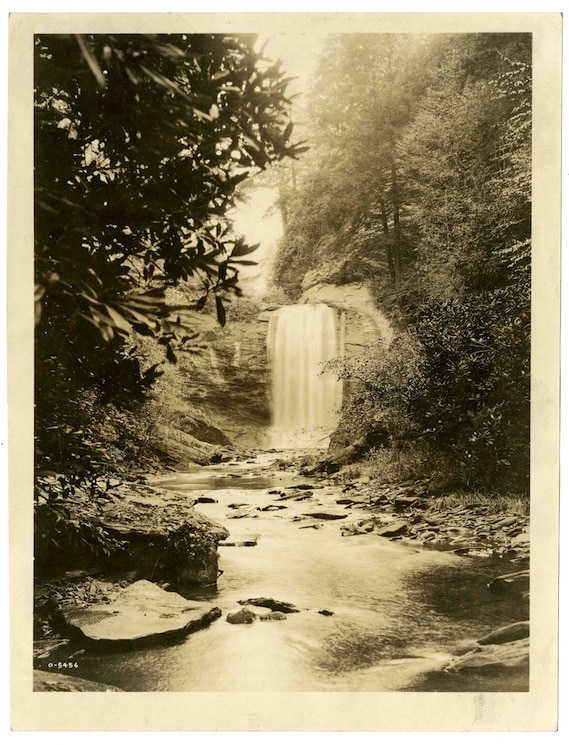
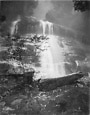
Among the photographs we submitted to UGA Press were those capturing the same subject from different perspectives, as well as images from each photographer’s respective side of the mountains. One area of common interest was waterfalls, and these images are especially striking. Both men also included images of people, often hiking companions, to provide a sense of scale of the landscape, and as an invitation to the viewer that this is a place worth visiting and saving.
Given that many of Masa’s images (some say his best) were lost, we wanted to select a roughly equal number of photographs by each photographer, and these images would be most representative of their full body of work. Ultimately, the final choice of images and placement in the book was made by the UGA Press design staff.
Chapter 16: As you make clear in the book’s introduction, there was strong opposition from business interests and conservative ideologues to the creation of a national park in the Smokies. We see a similar debate continuing today about public lands. What do you see as the most compelling argument for using public funds to preserve large natural areas?
 Ren and Helen Davis: Perhaps the most compelling argument today is the same one made by advocates in the 1920s for a park in the Great Smoky Mountains. We are faced with a choice: We can reap short-term economic benefits from extracting the resources from the landscape, or we can preserve the landscape for ourselves to enjoy and to bequeath to later generations.
Beginning in the mid-19th century and continuing for many decades, America’s forests were seen as nearly inexhaustible and the timber was needed to fuel the nation’s growth and expansion. Logging and mining in the Great Smokies provided jobs and generated wealth and tax revenues. There was little thought given to repairing the damage left behind or replenishing the devastated forests. Early efforts to create a national park in the Great Smoky Mountains faced nearly insurmountable obstacles since nearly all the land was privately owned by either small farmers or large timber companies.
However, beginning in the first decades of the 20th century, notably through the writings of outdoorsman Horace Kephart, the perils to this irreplaceable landscape came to the nation’s attention. Local groups in Tennessee and North Carolina were created to advocate for a park and to figure out how to achieve this objective. Fortunately, the leadership of the National Park Service, notably director Stephen Mather and his assistants Horace Albright and Arno Cammerer, were anxious to identify potential park sites in the East that would be more accessible to the American people.
Nonetheless, it would take several decades to overcome industry opposition and build the public support needed for a park and to find the funds required to purchase the land. As with other park projects, the Great Smokies project benefited greatly from the philanthropy of John D. Rockefeller, Jr., who pledged to match dollar-for-dollar the funds raised from public sources, up to $5 million. In addition, the onset of the Great Depression saw timber company revenues decline, which made them more willing to sell their land within the planned park.
Perhaps the most compelling argument for preserving these natural areas is that once they are gone, it will be generations, if ever, before they can be restored. Also, in a culture of rapidly advancing technology and demands on time and resources, people increasingly need places of respite, relaxation, and escape to reconnect with the natural world. Preservation of these natural areas as parks or refuges should be a national priority, not an afterthought.



Maria Browning is a fifth-generation Tennessean who grew up in Erin and Nashville. Her work has appeared in Guernica, Los Angeles Review of Books, Literary Hub, and The New York Times. She’s the editor of Chapter 16.