‘Vital Voices’
Denise Kiernan chronicles the role of women in the American Revolution
In Obstinate Daughters: The Rebels, Writers, and Renegade Women Who Ignited the American Revolution, author Denise Kiernan explores the roles of everyday women — and men — in the events leading up to and during the Revolutionary War.

She surveys a wide range of perspectives, including the experiences of patriots fighting for independence, loyalists struggling to maintain British rule, and enslaved people seeking their own freedom. She describes Quakers refusing to betray their beliefs by participating in the war and Native Americans protecting their homes and navigating relations with both the colonists and the British. Kiernan even writes about a baroness, Frederica Charlotte Louise Riedesel, whose homeland of Brunswick-Wolfenbüttel, now part of Germany, allied with George III. Her husband became a British Army general, and Charlotte not only followed him to America but traveled with the troops during the war.
Obstinate Daughters continues Kiernan’s literary examination of women’s involvement in historical events. In We Gather Together, she investigated the creation of Thanksgiving as an official holiday and the woman who championed the idea. The Girls of Atomic City centered on women who helped make the first atomic bomb during World War II.
In this latest book, Kiernan’s recounting of the Revolutionary War is exhaustive in both time and place. She details developments day by day and week by week, and she connects our present to our past by hunting for the exact streets and buildings relevant to these stories.
Kiernan’s style shifts throughout Obstinate Daughters; some parts read like a textbook and others are more narrative. Much of the book is written in the third person, but Kiernan switches to first person for sections devoted to her own experiences while researching. Her travels included visits to the Boston Women’s Memorial, Valley Forge National Historical Park and the Museum of the American Revolution in Pennsylvania, and the Eastern Band of Cherokee Indians’ Fourth of July Powwow.
 Referring to Mary Katharine Goddard, credited as the country’s first woman to serve as postmaster, Kiernan describes another excursion: “Once in nearby Washington, D.C., I decide to take my Goddard fan-girling self to the Smithsonian National Postal Museum on Massachusetts Avenue. For the philatelically inclined, this massive museum is a delight from an architectural as well as content perspective.”
Kiernan characterizes the traditional account of the Revolutionary War as “a pyramid of remembrance” topped by well-known individuals with the rest of society at the bottom. In her argument for the incorporation of this majority in our history, the reader can also glean her goal for Obstinate Daughters. She warns that “if an attempt to share what we have of these records is not made, the continued silencing of these marginalized yet vital voices further cements the belief that only some people matter. It increases the possibility that generations to come will fall prey to this same tendency to devalue and overlook, to ignore the illuminating yet muffled cries of the past.”
And Kiernan delivers, packing Obstinate Daughters with the names and actions of those who witnessed the Revolutionary War. A rotating cast of characters appears, disappears, and reappears throughout the book. Some are only briefly mentioned, but Kiernan explains why they all matter: “If storytellers now, in the present day, continue to exclude these lives, experiences, and contributions from our ongoing historical record, we do ourselves and future generations a disservice. An already incomplete record only grows more opaque with passing time.”
Revolutionary War enthusiasts and keen students of history will especially enjoy Obstinate Daughters. Its granular approach, focus on different perspectives, and inclusion of numerous passages from primary sources such as poetry and letters will augment their knowledge of the era.
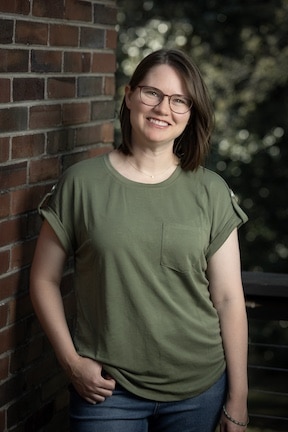
Maggie Gigandet is a freelance researcher and writer focusing on the outdoors and people with interesting passions. Her work can be found in The Atavist, Backpacker, Smithsonian Folklife, and Atlas Obscura. For more of her writing, please visit maggiegigandet.com.