Looking Closely at the Weeds
Margaret Renkl and Billy Renkl discuss their latest collaboration, a nature book for children
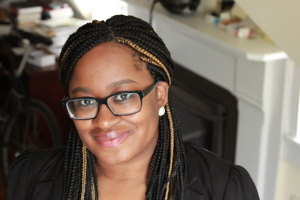
Whether she’s writing a column for The New York Times or journal entries about the backyard critters she spies from her Nashville home, Margaret Renkl’s nature writing is full of warmth and heart, a beautiful entwining of how the natural world impacts our inner worlds. The founding editor of Chapter 16, Renkl has authored several award-winning books for adults about nature and her love of the South. Now she’s entering the world of children’s literature with the release of her debut picture book illustrated by her brother, artist Billy Renkl.
With simple, poetic lines, The Weedy Garden: A Happy Habitat for Wild Friends invites young readers to imagine they’re the animals in a garden: “If you’re a bumblebee” or “a slender green snake” or “a tired turtle.” The weedy garden is full of life, providing sustenance and a home to a rich diversity of flora and fauna. The idea of a weed is turned on its head: not something to be pulled up and eradicated from the flower bed but an essential, life-giving force. Billy Renkl’s vibrant, collage illustrations are like a magnifying glass, zooming in on the wonders of the weedy garden.
Chapter 16: Margaret, you’ve written four books about the natural world and its wonders for adults, but this is your first picture book for children. What inspired you to write for a younger audience?
Margaret Renkl: Ever since I was a child myself, I’ve always wanted to write for children. I was so sure that writing for children would become my profession that I packed up a big carton of children’s books and took them with me to college. Then I fell in love with poetry, which led me along a series of winding detours. It took me all these years to find my way back.
But picture books, it turns out, have much in common with poems, and that has been a great revelation. I don’t think I was capable of seeing that connection back when I took my first detour. If I had been, we might not be having this conversation.
Chapter 16: How is the process of writing for children different than writing for adults? Did you find anything more difficult, or easier?
Margaret Renkl: I find writing for children much, much more difficult than writing for adults. It’s hard to manage it all at once — the tight scaffolding, the weight every word must carry, the need to think in page turns, the terror of an unforgiving audience. If you bore a child on even one page, the whole game is over.
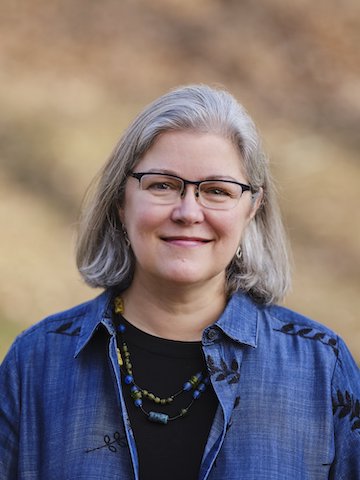
Chapter 16: Billy, this isn’t your first foray into illustrating picture books — you’re also the illustrator of the lovely When You Breathe by Diana Farid. Typically, writers and illustrators have very little contact with one another. You have worked with Margaret on some of her other books, but what was it like working with her on this picture book? Was it different than your previous experiences?

Billy Renkl: True to custom, I did not talk with Diana until the illustrations for When You Breathe were almost finished. There are lots of good reasons why authors and illustrators are kept apart. The main one, perhaps, is to give the illustrator a chance to have their own thoughts grounded in their own lives, and all based on an understanding of how images work (which is different from how words work).
As a reader, the illustrator encounters the words, not the author. Our collaboration is unusual: Margaret and I have trusted each other for more than 60 years. Also, she’s really a poet, regardless of whatever she happens to be writing. Poets understand that many rich and complex responses to their language are possible, some of them outside of the writer’s ambitions. I am profoundly grateful that Margaret trusted me to set a path through the book that was closely parallel to her own but not a thin representation of it.
And it’s not like they could have kept us apart anyway.
Chapter 16: Your collage illustrations for The Weedy Garden are gorgeous, so vibrant and immersive. They’re also very zoomed in on a specific scene. Where did you find inspiration for your illustrations? Why did you choose close-ups over larger scenes?
Billy Renkl: Children look at the things that are close to them closely. And they aren’t the same things that adults look at. I’m the laundry maven in my family, and one of the objects I cherish most is a jar filled with the nonsense I pulled out of my youngest son’s pockets every Sunday of his childhood: plastic bottle caps, unusual rocks, washers, bits of twisted wire, pull tabs. Whatever I found I put into the jar, which I now keep in my studio. That jar is one of the great lessons of my life.
Also, much of the imagery in the book comes from our yard, where all three of our kids played. Those are the flowers, the shrubs, the trees they played around. That’s our front porch in the lightning bug illustration, and that’s the gate to our back yard next to the door into the basement studio I share with my wife.
Chapter 16: I love wildflowers and so-called “weeds,” but many gardeners try to keep those out of their garden beds. What do y’all hope kids learn from reading this? What do you want to leave them with?
 Margaret Renkl: The easiest way to distinguish a wildflower from a weed, I think, is to figure out the plant’s origin. If it’s native to an ecosystem, it’s a wildflower. If it’s introduced from Europe or Asia and it also becomes invasive, then it’s a weed. Plenty of weeds have set up camp in my pollinator garden — creeping charlie, henbit, chickweed, and the like — and those I pull out. But the garden itself is made up of native wildflowers, and many gardeners mistakenly think of those glorious, necessary plants as weeds, too.
Plants like milkweed and ironweed and Joe Pye weed — and others so historically unwelcome that “weed” is part of their colloquial names — are crucial to the habitats we share with our wild neighbors. They provide food or shelter or a nursery site — or all three — to countless native insects, birds, mammals, amphibians, and reptiles. Children might not pick up on all that in this simple story about the interaction of plants and animals, but the book’s back matter goes into more detail about that relationship for the sake of parents and educators or older kids.
Those were my primary professional hopes for the book, but I had a personal motive in writing it, too. Can you think of any assignment more perfect for Billy Renkl than the chance to deliver himself over to the riotous beauty of a wildflower garden?
Chapter 16: Do you think you’ll team up on another picture book? What projects are you both working on now?
Billy Renkl: We’re deep into a follow-up book for children, The Leafy Blanket, which will be published next year. It features the same places and the same wild friends, but this time they’re settling in for the winter. The book is an ode to letting things be, to trusting that nature knows how to put itself to bed.
Whether they need burrows or hollow plant stems or leaves to tunnel under, our disheveled, unraked yards are necessary for bees and turtles and squirrels — just as necessary in fall as the weedy garden was in full summer a few months earlier. Even in October, spring is already underway; if you don’t cut back the ragged zinnias, they’ll feed the goldfinches and also drop seeds that herald next year’s flowers. All on their own!
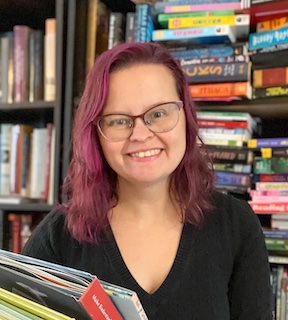
Margaret Kingsbury is the “Hey Nashville” newsletter writer for City Cast Nashville. Her book reviews have been published in Book Riot, BuzzFeed News, StarTrek.com, School Library Journal, IGN, and more. Her debut picture book, A Breath Between Leaves, will be published in 2027 from Groundwood Books. You can find her on Instagram @BabyLibrarians.