Hard to Pin Down
Jonathan Bernstein considers the short, troubled life of singer-songwriter Justin Townes Earle
Jonathan Bernstein’s What Do You Do When You’re Lonesome: The Authorized Biography of Justin Townes Earle catches the moment when Nashville music became Americana. Earle was a native of the city, and his story is bound up in its mythology as a place where songs get written by outlaws who live only for their art and burn out early. The book is, perhaps inevitably, the story of a gifted singer-songwriter with addiction issues whose genius lay in his ability to modernize the singer-songwriter aesthetic established by his father, Steve Earle, and a group of similar artists including Townes Van Zandt and Guy Clark.

Justin Townes Earle’s synthesis of country, folk, rock, and R&B was a template for Americana, but he didn’t enjoy the full benefits of his innovations before he died, at 38, in 2020. As Bernstein — a writer and research editor for Rolling Stone — tells it in his meticulously reported account of Earle’s short life, he had star-level charisma and substantial talent as a guitarist. But it was the Nashville tradition of rebelling against commerciality, embodied by figures as disparate as Guy Clark and indie-rock musician David Berman (a Nashville songwriter who was a generation older than Earle), that drove him.
Earle was a young musician in Nashville in the 1990s, a time of rediscovery. The Springwater, a venerable club that had started booking Van Zandt and Clark in the late ‘70s, was also a punk and rock ‘n’ roll venue that Earle would play many times. Steve Earle had released a 1986 album, Guitar Town, that appealed to rock fans who were also country fans. By the time Van Zandt died in January 1997, Americana had become a full-grown genre. Along with a group of luminaries that included his father, Rodney Crowell, and Emmylou Harris, Justin Townes Earle attended Van Zandt’s funeral. It was the day after his 15th birthday.
By 1999 Earle was playing solo shows, where his facile guitar style carried the music. He was also performing in the Swindlers, a band with a rotating membership that included other young sons of Nashville musicians. One of them, Skylar Wilson, whose father is country producer Wally Wilson, would go on to produce many of Earle’s albums.
Bernstein surveys the landscape of Nashville music in the early Americana era, as the genre matured. The roots musicians David Rawlings and Gillian Welch bought Woodland Sound Studios in 2001; meanwhile, the East Nashville scene was flourishing, with Elizabeth Cook, Todd Snider, and the revivalist rock band BR549 gaining in popularity. As Bernstein writes:
Three young Nashville bands making ragged jug-band and blues-inspired roots music that existed outside strictly defined bluegrass and old-time scenes were Old Crow Medicine Show, the Hackensaw Boys, and the Swindlers. The groups overlapped and befriended one another in this proto-Americana scene, busking on Second Avenue and showing up to each other’s gigs around town: when the sound guy didn’t show up for a Hackensaw Boys show at the historic bluegrass club the Station Inn, Justin and Dustin Welch helped run sound for the night.
 Earle released Yuma in 2007, and the EP established his reputation. After signing to the Americana label Bloodshot Records that year, he reached his commercial peak with Harlem River Blues, released in 2010. He made his debut on The Grand Ole Opry in 2008, introduced by singer Jeannie Seely. The experience didn’t turn him into a country singer, and Earle subsequently became interested in rock. His version of Paul Westerberg’s “Can’t Hardly Wait” appeared on his 2009 album Midnight at the Movies.
Although Bloodshot had invested in Earle on the strength of Harlem River Blues, Earle sabotaged the follow-up tour at the beginning. He was jailed after a drunken scuffle with a club owner in Indianapolis, then put the tour on hold and went into rehab at a facility near Nashville. Bernstein reports the club owner taunted Earle, triggering a violent outburst: “Everybody just came to the show because of your famous dad. That’s the only reason people were here.”
As Bernstein writes, Earle’s career never fully recovered from the bad press of the club incident and scuttled tour. He’d lost his longtime manager two weeks before the tour was set to start, and he began to be eclipsed by contemporaries like Jason Isbell, who became one of Americana’s most lauded figures.
It might not have mattered to Earle, who comes across as impossibly hard to pin down. For many musicians, the professional and the personal often operate as one, and Bernstein tells a distressing story of Steve Earle upstaging his son at a show with Levon Helm in 2010. In the end, being part of the family tradition was a full-time job. As Bernstein quotes Justin Townes Earle, “I don’t know anybody alive who doesn’t have a problem with their parents.”
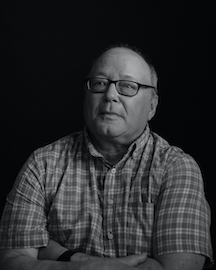
Edd Hurt is a writer and musician in Nashville. He’s written about music for Nashville Scene, American Songwriter, No Depression, The Village Voice, and other publications. He produced and played keyboards on The Contact Group’s 2021 album of 1970s covers, Varnished Suffrages.