‘How ‘Bout Dem Boats?’
Keith Wood tells the history of the Memphis Showboats, Tennessee’s major football franchise of the 1980s
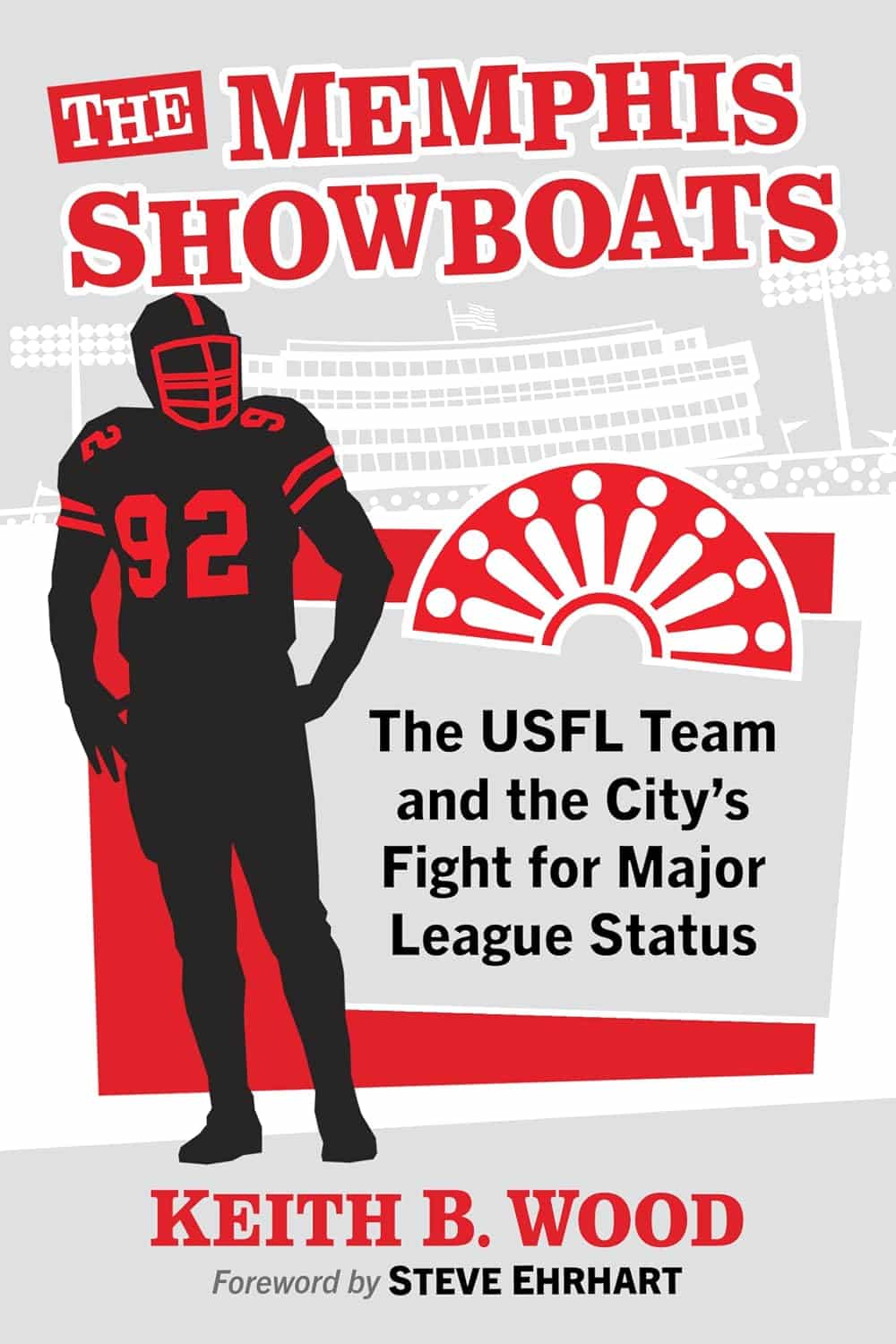
On a hot Sunday afternoon in July 1985, pro football in Memphis hit its peak. The Liberty Bowl hosted the playoff matchup between the Memphis Showboats and the Oakland Invaders, with a trip to the United States Football League (USFL) title game on the line. “How ‘Bout Dem Boats?” shouted enthused Memphians. But as Keith Wood writes in The Memphis Showboats: The USFL Team and the City’s Fight for Major League Status, the game was also an end. The Showboats lost, the USFL folded, and Memphis was once again shut out from the big leagues.

The leading authority on the history of sports in Memphis, Wood is also the author of Memphis Hoops and The Memphis Red Sox. He has a Ph.D. in history from the University of Memphis and teaches at Christian Brothers High School. He answered questions via email from Chapter 16.
Chapter 16: You write that Memphis had long been a “graveyard for professional sports.” Why, historically, was Memphis shut out from major sports leagues?
Keith Wood: The city’s history of chasing major league status is filled with stories of hope that perpetually end in disbelief. Memphis lost minor league baseball in 1960 when the Chicks left town, and again in 1976 when the Mets’ AA affiliate, the Blues, moved on. Both cited poor attendance. The 1970s saw the city gain an ABA franchise, only to see the Pros/Tams/Sounds leave town after three owners and mounting debt. Although the city supported the World Football League’s Southmen/Grizzlies, that league financially collapsed. Most recently, Memphis lost the 901 FC soccer club. Rumors now run rampant about the city’s ability to keep the Redbirds at AutoZone Park and the NBA’s Grizzlies at the FedExForum.
Chapter 16: Who was responsible for bringing the Memphis Showboats into the USFL? What were some of the barriers the team faced at first?
Wood: Mayor Walter Chandler convened a commission in 1982 to bring an NFL franchise to the city. The leading voice on the committee was Logan Young, a prominent University of Alabama booster. Young reached out to USFL founder David Dixon to inquire about bringing a franchise to the Bluff City. Memphis remained open to allowing a USFL franchise to relocate to Memphis or to accepting a bid for its own team. Former WFL owner John Bassett, who in 1983 owned the USFL’s Tampa Bay Bandits, became a valued voice within the USFL to advance the cause. Following the 1983 USFL Championship Game in Denver, the USFL commissioner announced six expansion franchises for 1984, with Memphis among them.
For the next six months, Young stood as the team’s owner, but he lacked the wherewithal of an NFL owner. This prompted John Bassett to recruit local cotton magnate and friend, Billy Dunavant, who purchased the team in January 1984. Dunavant’s ownership made the club one of the most financially sound in the USFL.
Chapter 16: Over time, the Showboats established themselves as a respectable team. How did this happen?
 Wood: The best place to start is with the team’s signing of All-American defensive end Reggie White out of the University of Tennessee. White, the future Hall of Famer whose presence on the defensive line allowed the team to build around him, was the most recognizable player.
From there, the hiring of Pepper Rodgers as the team’s head coach gave the franchise a personality that matched its moniker. The former Georgia Tech and UCLA coach brought a unique brand of football to Memphis, “Pepperball.” He kept journalists on their toes as much as he kept defensive coordinators on theirs. One never knew what to expect.
Then, after the Boats’ inaugural season in 1984, Dunavant brought Steve Ehrhart, the USFL’s #2 man, to Memphis as the new president and general manager of the club. Ehrhart immediately bolstered the lineup with NFL-caliber talent. His ability to sign top-level players can be best appreciated when, five years after the USFL folded, 20 of the Memphis Showboats players remained on NFL rosters. The average NFL career spans only three seasons.
Chapter 16: How did the team seek to promote itself to the community? Did it work?
Wood: Marketing for the club started with the moniker itself, the Showboat, an iconic symbol of the riverboat mentality of the city and its head coach. John Malmo, marketing director, led the charge for season ticket sales at malls, the Libertyland amusement park, the Adventure River water park, and the Memphis Zoo. He brought along Rodgers and the “Dreamboats,” led by Memphis State pom-pom coach Cheri Ganong. In another promotional scheme, Memphis Area Transit Authority turned several buses into would-be showboats.
The Showboats brought fans together at the Liberty Bowl. As the team became one of the league’s top teams, attendance followed, with the stadium selling out for its final home playoff game against the Oakland Invaders in the 1985 USFL semi-finals.
Chapter 16: Why did the USFL fall apart? What did it mean for the future of pro football in Memphis?
Wood: In 1986, the USFL owners decided to challenge the NFL by playing in the fall. Divided over whether to remain in the spring or go head-to-head with the NFL, Billy Dunavant sided with those seeking to play in the fall. The league also filed an antitrust lawsuit against the NFL as it awaited the 1986 season. Although the USFL won the suit, it was awarded only $1, which the judge trebled. Without the expected payout from the case, the remaining owners decided to fold the league. Thus, Memphis, although it stood as a formidable team on the field and was financially secure, was left at the altar once again.

Aram Goudsouzian is the Bizot Family Professor of History at the University of Memphis. His most recent book is The Men and the Moment: The Election of 1968 and the Rise of Partisan Politics in America.