Humble, Selfless, Indefatigable
Joe Pagetta tells the story of a 19th-century missionary to Tennessee
In The Apostle of Tennessee: The Indefatigable Life & Ministry of Father Aloysius Orengo, author Joe Pagetta chronicles the work of a 19th-century Catholic priest. Father Orengo was born in the Kingdom of Piedmont-Sardinia, now part of Italy, and arrived in America in 1845. He spent the next 25 years traveling Middle and West Tennessee serving local Catholics, converting others to Catholicism, and building churches. Orengo persevered despite many dangers and hardships.

The book, which is part of the Truth, Lies, and Histories of Nashville series published by Vanderbilt University Press, places Orengo’s story in its historical context. Pagetta explores the growth of Catholicism, as well as the political and cultural climate of Orengo’s time. Readers will learn about the Civil War in Tennessee; meet notable figures like the first bishop of Nashville, Richard Pius Miles; and discover present-day links to this time period such as the famous St. Patrick’s Irish Picnic that’s been held in McEwen for more than 170 years.
Pagetta is the director of communications for the Tennessee State Museum and frequently writes about Catholicism and his life. His work can be found in America Magazine, the Nashville Scene, and Chapter 16. He answered questions from Chapter 16 via email.
Chapter 16: In the preface, you explain how your focus shifted while researching The Apostle of Tennessee. You write that you still aimed for accuracy but “I stopped fixating, however, on whether what I read in oral histories was factual and started thinking instead about where they fit in the overall truth of Fr. Orengo.” How did you evaluate sources to determine their value to Orengo’s story?
Joe Pagetta: The context of that quote was a conversation I had with Dr. Kristen Bradley about weather lore and the belief that it had never rained at the Irish Picnic in McEwen. Looked at only factually, with whatever historical forecasts you have, it’s a black-and-white story and doesn’t tell you all that much. Much more interesting is what the belief tells you about the people who have run the picnic for more than 170 years. When it came to stories about Orengo being chased with butcher knives or evading robbers, there wasn’t a police blotter I could visit at the local precinct, like I used to on my morning rounds as a young news reporter 35 years ago, to verify them. I had to think about those stories more holistically and how they persisted in histories decades and even a century later. Which is what I think the Truth, Lies, and Histories of Nashville series wanted me to do. Certainly, the first-person accounts from Sister Mary Pius and others, albeit gathered in some cases 50 years later, were treated with much greater veracity.
Chapter 16: You confide to the reader that after moving to Tennessee from New Jersey you recognized you’d need to intentionally cultivate your relationship to Catholicism and dedicated yourself to reading and studying. Did the experience of writing this book influence your connection to your faith or your connection to Tennessee?
 Pagetta: Absolutely, it did both. While my formative years were spent in Jersey City, and I always include that fact in my bio, I’ve been in Tennessee for almost 30 years, more than half my life. Researching and writing The Apostle of Tennessee took me places and introduced me to people and stories in the state that deepened my connection to it. I feel great affection for the state and feel more like a Tennessean now than I did when I started the book. Regarding my faith, the experience has deepened it. On a nuts-and-bolts level, even though they may have nothing to do with the book, I know now the names of certain vestments and architectural aspects of churches I didn’t know before. I was in the sacristy at St. Peter’s in Memphis when I learned about the sacrarium, a special sink that drains directly into the earth rather than the sewer so that when vessels or linens are cleaned, the body and blood of Christ return to the soil. I’ve been Catholic my whole life – I was even an altar boy for four years – and never knew about that!
On a more personal level, Fr. Orengo’s commitment to his mission amid the many hardships he faced, and the resolve of those he served, edified me and reminded me of the great gift of my faith. I’m in Ireland as I write this, on vacation with my family, and we’ve spent a lot of time on tours and in museums learning about how the oppression of the Catholic faith for centuries and the famine impacted those who emigrated from Ireland in the mid-19th century and found their way to Tennessee. These were the people that Fr. Orengo was ministering to, and I think their story and their commitment to their faith is remarkable.
Chapter 16: What would you like the reader to remember about Father Orengo, and does this change depending on whether they are Catholic?
Pagetta: I’ve wondered if you must be Catholic to enjoy the book and Fr. Orengo’s story. I don’t think you do. My hope is that people remember his humility and his selflessness, his commitment to his mission and the people he served. His story is an American one, too: an immigrant who served mostly other immigrants at an extremely difficult and unwelcoming time in this country for both Catholics and immigrants. If you are Catholic and a Tennessean, I hope you remember him for the great tradition he established for us. Lastly, his indefatigability! And in the process, how to pronounce indefatigable. I think it would be fun if that word made it back in the everyday lexicon of American conversation. I think it’s time to replace the nonsense of she “is a rockstar” or he is “killing it” with … “she’s indefatigable!”
Chapter 16: In a 2024 Tennessee Home & Farm article, you wrote about how some books you’ve read are forever connected to specific memories of people, places, and experiences. What comes to mind when you think about researching and writing The Apostle of Tennessee?
Pagetta: Years from now, when I see the spine of The Apostle of Tennessee on my shelf, it will take me back to McEwen and St. Patrick’s and Humphreys County; to Barbara Hooper, Ted Rice, Dr. Kristen Bradley, and the Irish Picnic. It was among the first places I visited for the book. I’m still so moved by the community there and their kindness, for me and for each other.
Chapter 16: In addition to writing, you have produced the film A Grand Design: Captain Le Roy Reeves and the Tennessee State Flag, and you and your wife, Keri, have produced The Passion of Ethel Rosenberg, a podcast based on a play. How does the medium — print, visual, or audio — affect how you tell your story?
Pagetta: Beyond the obvious differences in the needs of each medium, I see film and podcasts as collaborative mediums. There are exceptions, but for me, you can’t really make a film by yourself. I had a vision for A Grand Design, a general idea in my head and then on paper of the order of things and what interviews and B-roll we needed and where I wanted things to go, etc. It was the talent that everyone else brought to it, however, that really made it work. I really loved that part of it, fleshing it out together. I get a real lift from being around and working with creative people, and making that film was a dream. This is an interview about the book and not the film, but I really recommend you explore the credits on the Tennessee State Museum’s website for a list of all the incredibly talented people at the museum and Nashville PBS who worked on it.
The podcast was a similar collaborative effort even though we had Ed Morris’ script and Carolyn German’s original direction to work from. Keri and I, when we make the time while being parents and having jobs and our individual personal creative endeavors — she’s an actor, voiceover artist, and co-producer of an independent film currently in post-production — are great collaborators. We have different approaches and strengths, but once we start bouncing ideas off each other, it’s invigorating.
Writing might seem a little less collaborative at first, even a bit lonely, but I’m still in some kind of dialogue in the process with God and with the eventual reader. I try to begin with what Ignatian spirituality calls colloquy, or an intimate conversation with God. Basically, I ask that He be with me and accompany me. Flannery O’Connor’s prayer journals included prayers in which she asked God to help her be a good writer and get something published. I get it! Eventually, I’m going to ask Keri to read what I’ve written, and she’s going to be honest with me. And then we’re back to collaborating! A last point on this, regardless of the medium, it all requires deep work. I don’t think I’d figure out what any story needs, or even what to bring into a collaboration, if I didn’t block out everything else and devote significant time to it.
Chapter 16: In Apostle, you write, “As a second-generation Italian American, adding to the scholarship and accomplishments of Italians in America (and cutting down the Hollywood stereotypes) has always been a priority for me.” You’ve published several articles about the Italian American author Pietro di Donato, and now you’ve published this book about Father Orengo. How will you continue your mission?
Pagetta: Before I signed the contract for The Apostle of Tennessee, I’d been shopping around a book proposal, unsuccessfully, for a biography of Pietro di Donato. Maria Browning, the editor of Chapter 16, knows well my obsession with Pietro. I’m always talking about it! I think he’s such an important, and yet sadly unheralded American writer. I think putting him back into the conversation about our country’s great writers could really expand our history of Italian Americans. I hope to sharpen that proposal and get it back out there. Oddly enough, to refer back to my answer to your second question, to properly research Pietro, I’d have to go back and spend some time in Jersey City, New Jersey. Pietro was born and raised in Union City, then called West Hoboken, the city just north of Jersey City. It’s about a mile from where I grew up. While researching The Apostle of Tennessee, I became really interested in the Italians who founded St. Lawrence Catholic Church in Joelton, Tennessee. Their story didn’t fit my narrative and timeline, but I would love to tell it. Unfortunately (or fortunately) there is another writer who tells me he’s already on it. Maybe we’ll collaborate!
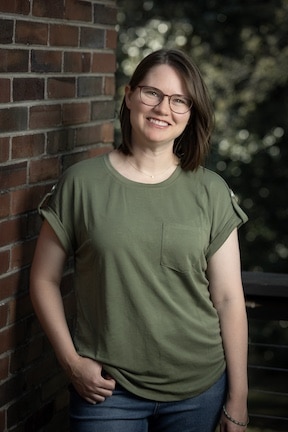
Maggie Gigandet is a freelance researcher and writer focusing on the outdoors and people with interesting passions. Her work can be found in The Atavist, Backpacker, Smithsonian Folklife, and Atlas Obscura. For more of her writing, please visit maggiegigandet.com.

 Julie Dennis.jpg)